By Stewart Bartley, 15+ years as a Quantity Surveyor and Senior Commercial Manager in UK housebuilding
How Much Does it Cost to Renovate a House in Spain in 2026?
What renovation actually costs in Spain - and why the numbers surprise people
The idea that renovating in Spain is cheap is only partly true. Labour costs are lower than in the UK, a skilled builder or tiler on the Costa del Sol will typically charge less per day than their British equivalent. But materials are not significantly cheaper, professional fees add up, and the bureaucracy around permits and licences can extend timelines and budgets in ways that catch expats off guard.
The figures below are realistic planning ranges for 2026, based on what expats are actually paying across Málaga, the Costa del Sol, and inland Andalusia. They cover everything from a light cosmetic refresh to a full structural renovation. Use them to sanity-check quotes and set a realistic budget before you start talking to builders.
The four levels of renovation in Spain
Before getting into numbers, it helps to understand how the building industry in Spain categorises renovation work, because the level of work determines not just the cost but what permits you need and who needs to be involved professionally.
- Reforma cosmética - cosmetic refresh. Painting, new flooring, replacing fixtures and fittings without touching structure or services. Lowest cost, usually no permit required.
- Reforma parcial - partial renovation. Bathroom or kitchen replacement, new windows, air conditioning, updating electrics or plumbing. Mid-range cost, minor works permit (licencia de obras menor) typically required.
- Reforma integral - full renovation. Complete overhaul of an entire property including structural elements, new layout, full rewire, new plumbing. Significant cost, full building permit required, registered architect typically involved.
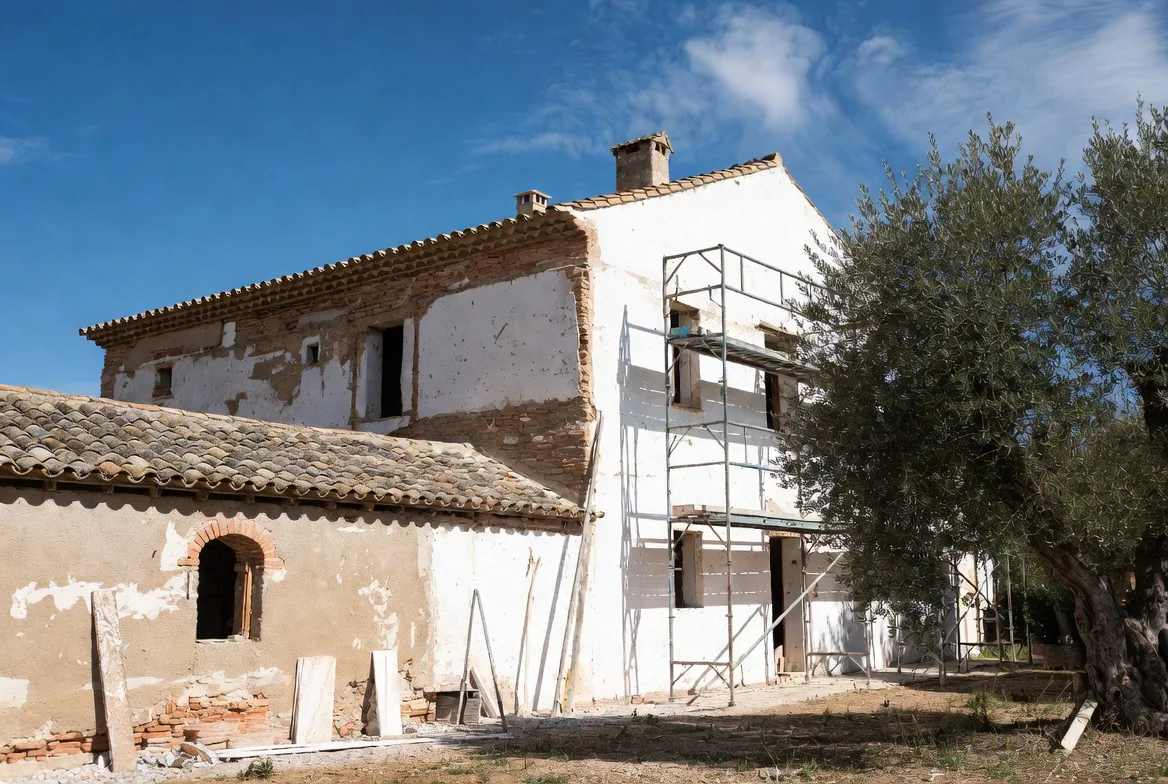
- Rehabilitación - structural rehabilitation. Restoration of a property in poor structural condition, often a ruin or a property requiring underpinning or roof replacement. Highest cost category, full professional oversight required.
Note: this menor/mayor classification is the general framework used across most of Spain, but Málaga city itself replaced it with a Declaración Responsable / Licencia de Edificación system after a February 2025 ordinance reform. If your property is within Málaga city, confirm the current category with the ayuntamiento rather than assuming menor/mayor still applies.
Cosmetic renovation costs in Spain
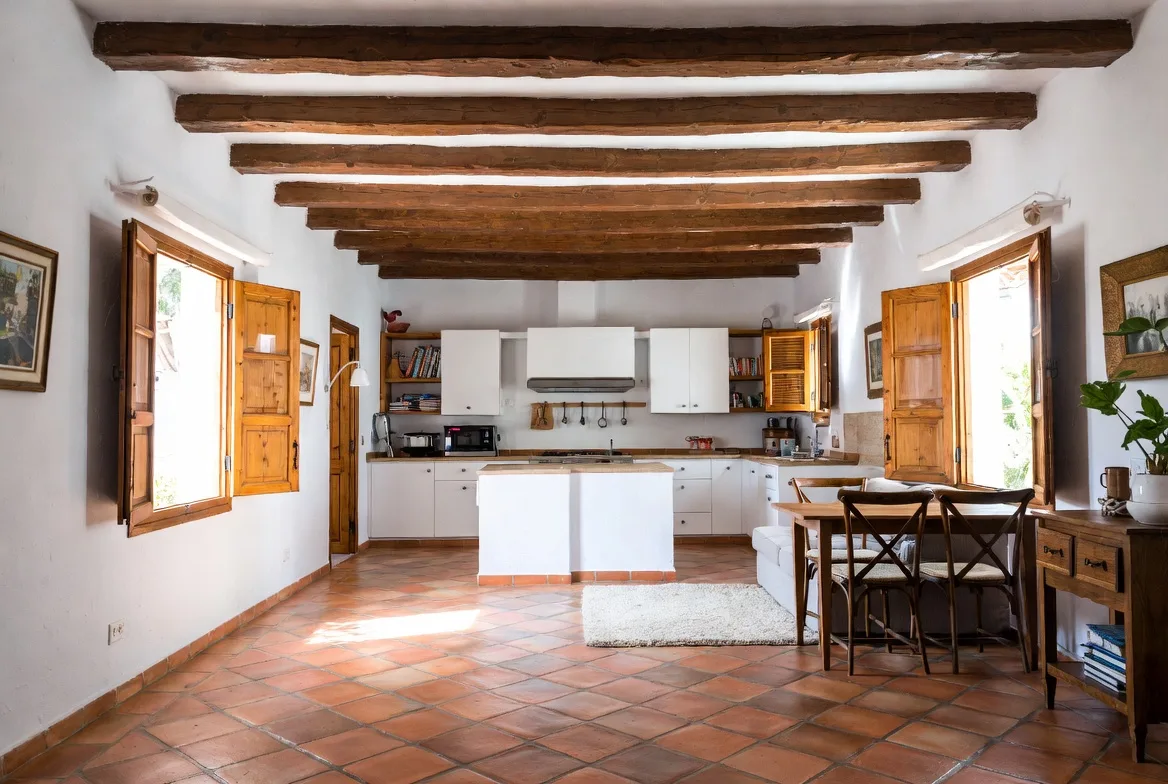
A cosmetic refresh, new paint, new flooring, updated fixtures, fresh window dressings, is the most straightforward category. For a two-bedroom apartment on the Costa del Sol, a solid cosmetic refresh typically costs between €8,000 and €20,000 depending on the quality of materials and finishes chosen.
- Two-bedroom apartment, cosmetic refresh: €8,000 to €20,000
- Three to four bedroom villa, cosmetic refresh: €15,000 to €35,000
These figures include new flooring throughout, full interior repaint, replacement of bathroom and kitchen fixtures where the layout stays the same, and new internal doors where needed. They do not include structural work, rewiring, or replumbing.
Partial renovation costs in Spain
A partial renovation, typically a new kitchen, a new bathroom, updated electrics, or new windows throughout, costs significantly more once tradespeople from multiple disciplines are involved. Budget in the range of €20,000 to €60,000 for a two-bedroom apartment undergoing a meaningful partial renovation, more for larger properties.
- Two-bedroom apartment, partial renovation: €20,000 to €60,000
- Three to four bedroom villa, partial renovation: €40,000 to €100,000
The wide range reflects the variability in scope. A partial renovation that includes a new kitchen, one new bathroom, full rewire, and new windows will sit at the higher end. Updating electrics and replastering throughout without touching kitchens or bathrooms sits at the lower end.
Full renovation costs in Spain
A full reforma integral, complete gutting and rebuilding of the interior, new layout, full rewire, new plumbing throughout, new kitchen and bathrooms, new flooring, replastering, painting, is the most significant investment. Costs vary considerably by property size, specification, and location.
- Two-bedroom apartment, full renovation: €60,000 to €120,000
- Three to four bedroom villa, full renovation: €100,000 to €250,000
- Large villa or finca, full renovation: €200,000 to €500,000+
As a rough rule of thumb, a full reforma integral in Andalusia currently costs between €600 and €1,200 per square metre depending on specification. Premium finishes, imported materials, bespoke joinery, and architect-designed interiors push toward the upper end of that range and beyond.
Professional fees - the costs expats often forget to budget for
For anything beyond a cosmetic refresh, professional fees are a real and often underestimated part of the budget. In Spain, significant building work requires the involvement of registered professionals whose fees are separate from the builder's quote.
- Arquitecto (architect): typically 4 to 8 percent of the total build cost for design and project oversight
- Aparejador or arquitecto técnico: typically 2 to 4 percent of the total build cost for site supervision
- Gestor (administrative agent): €500 to €2,000 for managing permit applications and paperwork
- Notary and registration fees if the work affects the property's registered description: €500 to €1,500
For a full renovation, budget an additional 10 to 15 percent on top of the build cost for professional fees, permits, and administration. Skipping the professionals to save money is a false economy, work carried out without the correct oversight and permits can be declared illegal and ordered to be demolished at your expense.
Permit costs in Spain
Planning permission (licencia de obras) is not free. Fees are set by each ayuntamiento and vary considerably across the Costa del Sol and inland Andalusia. As a general guide:
- Licencia de obras menor (minor works permit): €150 to €600 depending on the municipality
- Licencia de obras mayor (major works permit): typically calculated as a percentage of the declared build cost. National law sets a ceiling of 4 percent, and most ayuntamientos on the Costa del Sol set their own rate somewhere in the 2 to 4 percent range
Your architect or gestor will handle the permit application as part of their service. Factor permit costs into your budget from the start, they are not optional and unpermitted work creates serious problems when you come to sell the property.
The costs that always seem to appear mid-project
Every experienced renovator in Spain will tell you the same thing: budget for surprises. Older properties on the Costa del Sol frequently conceal problems that only become apparent once work starts. Common ones include:
- Outdated or non-compliant wiring that requires a full rewire before any additional electrical work can proceed
- Asbestos in older floor tiles or roof materials, removal adds cost and requires specialist contractors
- Structural issues concealed behind render or plasterboard
- Inadequate drainage or waste pipes that do not meet current standards
- Damp and water ingress behind tiles or under floors
A contingency fund of 15 to 20 percent of your total budget is not pessimistic, it is realistic. Expats who budget tightly and leave no contingency find themselves either stopping a half-finished project or paying for surprises on a credit card. Neither is a good position to be in.
Getting the right people for the job
The single biggest variable in any renovation budget is who you hire. An experienced, registered builder with a track record of expat renovation projects on the Costa del Sol will cost more per day than an unregistered one, but will almost certainly cost less overall when you factor in the quality of the finish, the avoidance of costly mistakes, and the protection you have if something does go wrong.
SpainTrades lists vetted builders, electricians, plumbers, and other tradespeople across Málaga and the Costa del Sol, all registered, insured, and reviewed by expat clients after real projects. Before you start planning your renovation, it is worth finding out who is working in your area and what other expats have said about them.
Search by trade and location at www.spaintrades.es